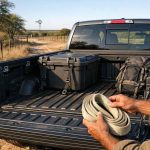
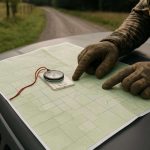


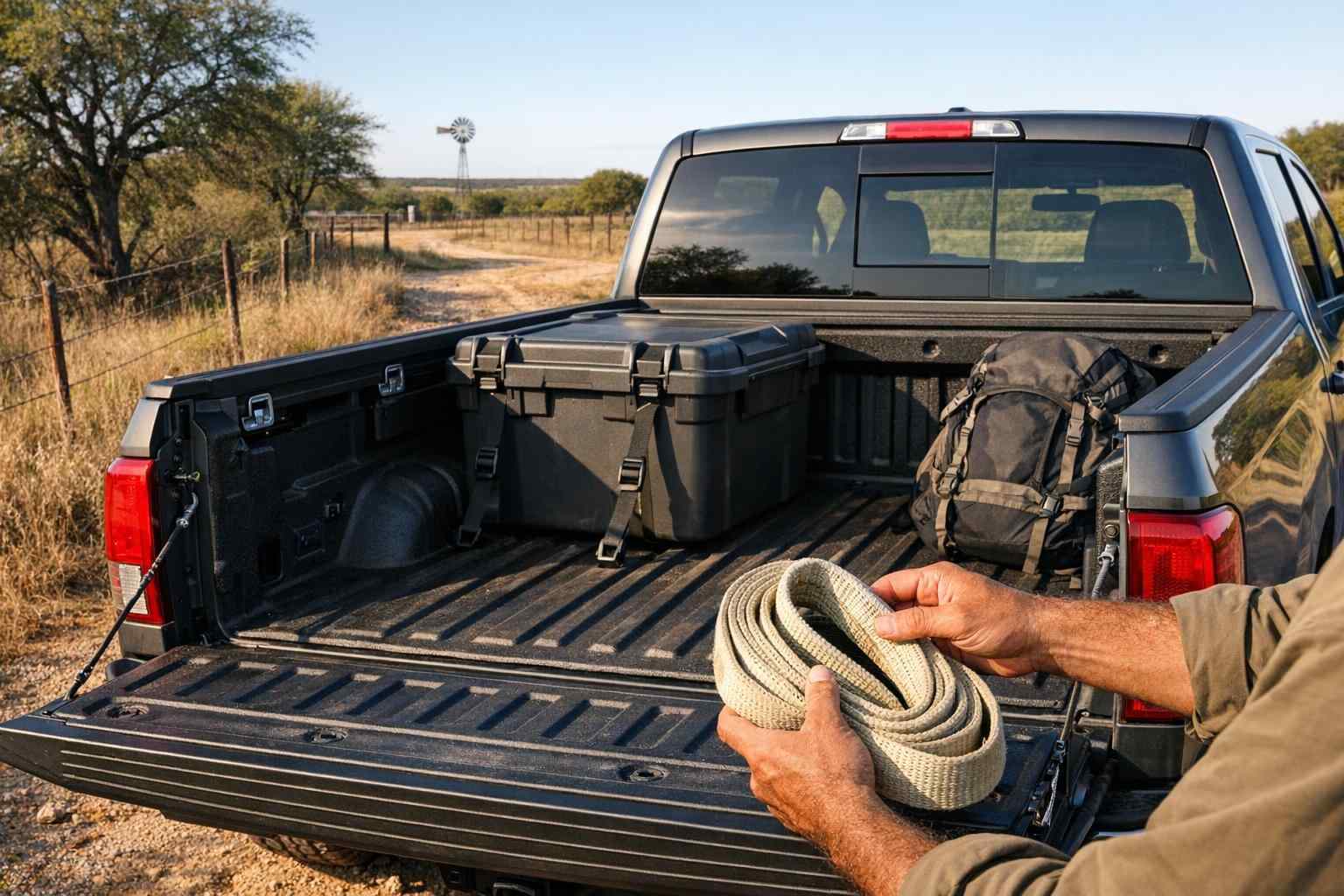

In order to pack hunting gear in the truck safely and conveniently, first of all, you need to define the jobs your vehicle will be used for, i.e. for short scouting trips, for full days of changing weather, for remote overnight camps. Then, organize the corresponding gear in three categories of equipment: (1) used almost every time; (2) only used for special seasons or types of hunting; (3) for home storage until needed for the appropriate time of year or type of hunting. The gear used almost every time should be stored in the easiest-to-reach location in the truck.
Start with the jobs the vehicle must perform
Start with the tasks your vehicle actually supports. A short scouting trip, a full day of hunting in changing weather, and a remote campout are all best supported by different equipment and thus different organization in your truck. Build your storage organization for your hunting gear around these different uses of your truck.
Divide your gear into three groups of things you take on most trips, things you use for specific activities or in certain seasons, and things you keep at home until you have a reason to take them on a trip. The items you use on most trips should be the easiest items to reach. Items you use for specific activities or in certain seasons can be stored in labeled totes or removable cases. Items you keep at home until you have a reason to bring them on a trip should not be stored in your vehicle.
Many large items also reveal duplicates for example a set of extra knives for your multi-tool. Old clothing for seasons that have passed, empty packaging, tools for long broken pieces of equipment, etc. Simply getting rid of these will be a big part of your storage solution.
How would you unload the vehicle after an outing? All the equipment that has to come out all the time should not be mixed up with the equipment that stays packed most of the time. Mud-covered boots, damp clothing, and food waste are best to be unloaded immediately. A small roadside repair kit, on the other hand, might remain in the vehicle.
Give essential gear a visible home
The best location in your vehicle for any piece of gear is not necessarily the most protected location. For example, headlamps, first aid supplies, water, maps and guides, and other essential items should be easily accessible without having to unload the entire vehicle. Items that get buried under layers of clothing may be present but not functional.
You should have clear containers for smaller items that are closed up and have labels on them. Then you have opaque totes for bigger items that may be light sensitive. This is where you store bulky items like sleeping bags etc. You should label these clearly so you can tell what's in them without having to open them.
It is best to assign fixed locations within your vehicle for your essential items and maintain them within these designated locations rather than distributing them among various storage containers. Tools such as flashlights, gloves and tire pressure checkers are among the essential items often frequently forgotten and are best stored in fixed locations, such as within the cab of the vehicle, to ensure they are always readily available.
In the cab, keep items that you would need while driving from one place to another (like a day hike). Keep necessary items for a quick stop at a service station or restaurant. Try to keep loose items from becoming flying projectiles in case of an accident. Consult your vehicle's manual for best locations and methods to store these items to view and operate controls without obstruction.
Build a loading order, not just a packing list
The best system for loading your gear into your vehicle will follow the sequence in which the items will be used. Items which you will need before you leave the trailhead, such as first aid supplies, food, water, and the like, should be loaded near the top of your vehicle, and on the outside of your cargo area. Items such as camp equipment, extra clothing, and the like can be loaded in the middle of your cargo area, and loaded in a depth that will ensure that they will not be needed until later in your outing.
I often sort my gear into three 'layers' of depth within my vehicle. The first layer is stuff that you'll need before you reach your destination. This will typically include items such as daypacks, water, and foul weather gear. The second layer comprises gear that you won't require until later such as clothing and camp equipment. The third layer consists of items that you won't require for some time, and these would typically be stowed at the very bottom of your load.
Using straps, dividers and containers to stop items from sliding around in your storage space is vital. But, don't overfill your containers and boxes with loads of accessories and detritus. A partly empty container or box is far easier to rummage through to check for damage and to restock than a fully packed one.
Protect gear from moisture, dirt and heat
The vehicle is an uncontrolled storage area. Be cautious of mud getting into buckles and zippers, damp clothing getting wet and then developing musty odors and encouraging corrosion. Try to store things in containers that are resistant to weather but be aware that some items should not be stored in sealed containers for fear of getting wet and then remaining so. Particularly, foods, fuels, chemicals and vehicle fluids should all be stored away from each other.
Remember to use weather-resistant containers and baggs to store items like wet clothes, muddy boots and soggy food waste, but don't seal them in for too long as they can develop nasty odors and even rot and mold. Store food separately from fuel, chemicals and vehicle fluids and always check for leaks before storing the item in the truck with clothing or medical supplies.
It is also important to store optics, batteries and electronic devices in a safe place to prevent them from being damaged by other items in the vehicle. Note the manufacturer's instructions for the care of these items and try to store them in a cool place to prevent heat damage.
Make inspection part of the routine
When returning to your vehicle don't just dump all the trash from your last trip in the truck. Clear out all the wet gear, field rubbish and anything else that needs to come out of the truck before it gets buried under more junk. Also take the time to look for any worn or damaged items such as cracked buckles, torn or frayed straps, leaking containers and missing items.
A short checklist with the most critical items such as lights, water, first aid kit, maps and compass, communication devices, recovery equipment for the vehicle and seasonal clothing would identify any issues prior to hitting the road. It is very easy to pack a number of items and then fail to recall if all have been loaded, especially when loading up in the poor light of early dawn.
Check out your vehicle tools separately from your other gear. All tire tools, a jack, tow straps, etc. should be present for your vehicle and be used for the purposes for which they were designed. Inspect all straps and attachments for wear. Refer to the vehicle and tool manufacturer's instructions for use. Recovery situations can be complex so if you do not know what you are doing, seek assistance from a qualified person.
Repack for the next trip
Remove all gear at the end of a season of activity, or after your style of hunting has changed, and reorganize the same items into categories. Then remove clothing no longer suitable for current weather, discard worn or damaged items, restock consumed supplies, and spend some time cleaning any dirty containers. Finally, put all specialized items away in their designated storage location(s).
Leave a little room for surprises such as an unexpected extra layer, a muddy pair of boots or some odd supplies that you may have collected along the way. In many cases a partially empty box or container is far easier to inspect and then repack for the next trip than a densely packed one. The best hunting-vehicle organization is one that is able to enable access to essential items in an emergency, which also temporarily stores items of a junk-like nature and which is easy to 'reset' after a season for example.